
![Flatness Tolerances for Metal Stamping [FREE CHART]](https://daytonrogers.com/wp-content/uploads/2021/12/Pieces-Galvanized-Painted-Sheet-Metal-Background-300x200.jpeg)
Flatness Tolerances for Metal Stamping [FREE CHART]
When flattening for your metal stamping project, first need perfect flatness – that condition which exists when all points on a surface lie in the same plane. In order to achieve perfect flatness, you first need to know the flatness tolerance for the surface you’re working with. WHAT IS FLATNESS
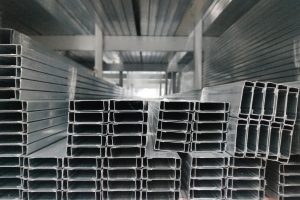
How to Choose the Right Carbon Steel Strip for Metal Forming
Carbon steel is a popular choice for metal forming and metal stamping products for the wide variety of finishes and rigidity. When choosing a cold rolled carbon steel strip, it’s important to know what softness is best for your project. Below are the varieties of carbon steel strip you can choose for

Practical Tolerances for Short Run Metal Stampings
Practical tolerances for our Short Run Metal Stampings vary according to the design of the part. Generally, all dimensional tolerances compared to costs can be illustrated by the following diagram “A”. Reading from right to left, we illustrate that within the more generous limitations, the cost increases slowly—but, as the

Dimensioning Practices for Press Brake
Practical experience has proven that dimensioning and measuring practices must both be understood and agreed on by all parties to achieve a workable, mutual standard. Formed sheet metal parts present a unique problem in that angular tolerances as well as the flatness conditions interact with single plane dimensions because of
![How to Calculate Tonnage [FREE FORMULA]](https://daytonrogers.com/wp-content/uploads/2021/12/Worker-at-manufacture-workshop-operating-cidan-folding-machine-300x150.jpeg)
How to Calculate Tonnage [FREE FORMULA]
The Tonnage Formula is the pressure required in tons to cut a blank or contour using a flat faced punch with no shear. Tonnages can be calculated for forming, bending, cutting, drawing, and blanking operations. Having the ability to calculate the tonnages for a sheet metal project is vital for
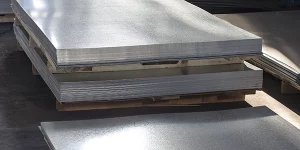
The Minimum Bend Radius for Aluminum (With Free Reference Chart)
Precision Sheet Metal Bending & Fabrication Guidelines for Engineers When working with aluminum over sheet metal, several variables need to be considered. Aluminum is typically thicker and stronger, and requires more force to bend as well as consideration of edge conditions and punch nose radii. This free chart outlines what bend radii is required
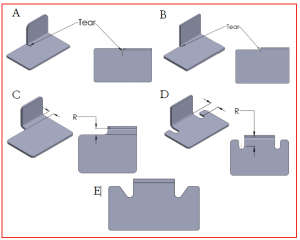
How to Position the Metal Form
The position of the metal form is vital for the success of your project. Diagram “A” illustrates a design that is not desirable for quality or economy. When the form is inside the blank profile, as shown, the material must be torn through the stock thickness and the bend radius.
3 Ways to Improve Edge Conditions
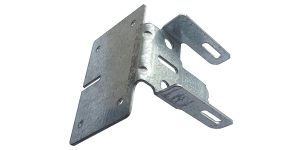
During shearing and punching, there are a number of factors to keep in mind to improve edge conditions. On ferrous materials, the clearance between punch and die should be about 8% to 10% of the material thickness, which may vary due to hardness and thickness. The punch and die clearance
How to Pierce Round Holes in Metal Stampings
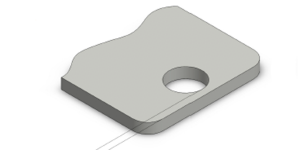
Many metal stampings require holes, but there are several considerations when choosing where to place a hole and how to pierce the hole. To pierce holes with economical tools and operations, the hole diameter must not be less than the stock thickness. If the hole diameter is less than the